The word of the day is selvage.
Where do you end? Where do I begin?

I highly recommend the reading of these four books simultaneously or in rapid succession:
Finding the Mother Tree by Suzanne Simard
The Light Eaters by Zoë Schlanger
The Soul of an Octopus by Sy Montgomery
Abducted by Lichen by Glenn Siegel
Doing so might make this post a) intelligible, and b) superfluous.
Yo, Alice.
The current rabbit hole topic I am returning to you from is mitochondria. Mitochondria sit in every cell of your body (except red blood cells, who early in the life-shift back at the warehouse tossed mitochondria off the truck to leave more cargo space for oxygen-carrying hemoglobin.) Mitochondria provide energy and heat, store calcium, and have a role in the aging and death processes.
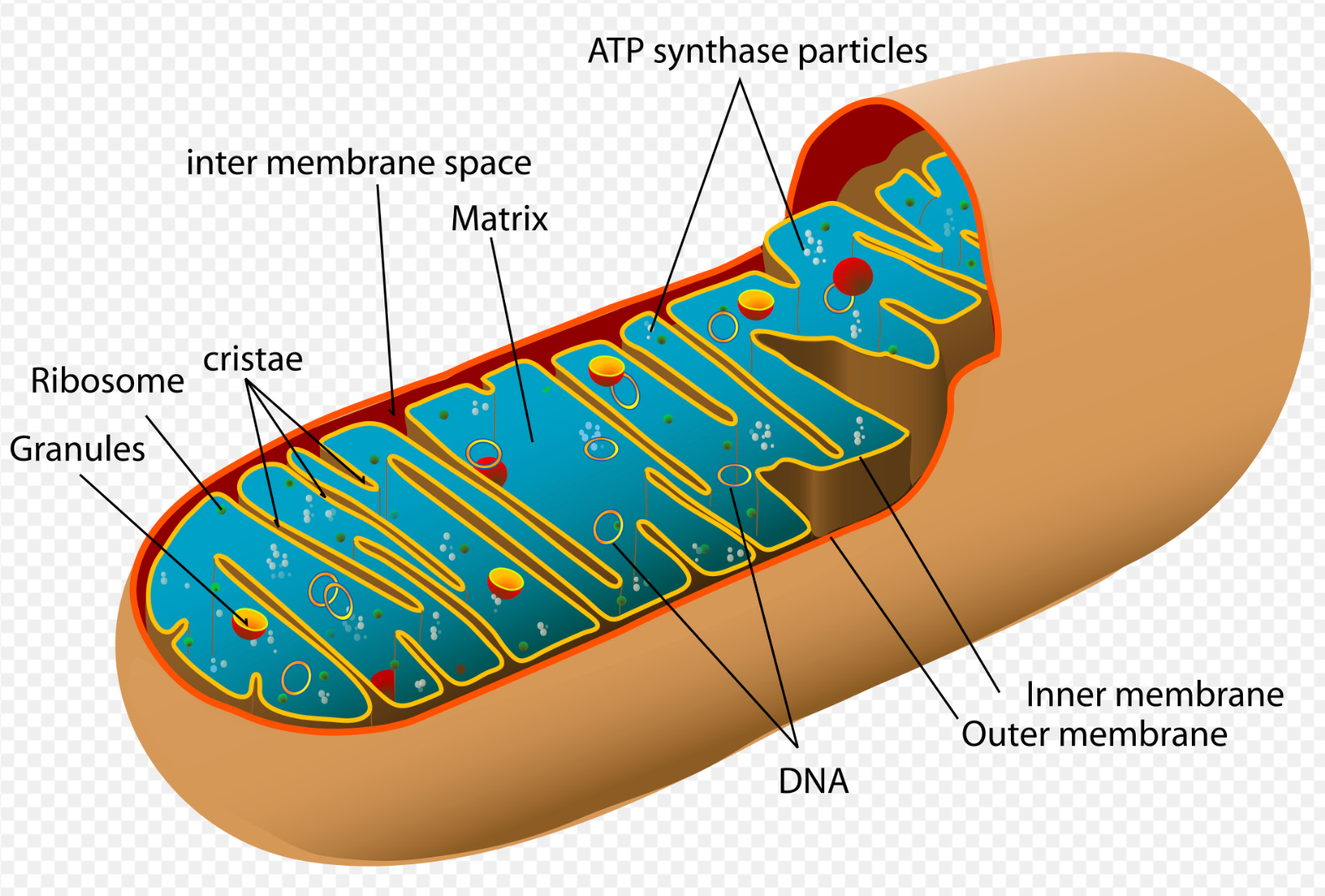
Kind of important.
Also kind of important is the fact that mitochondria have their own DNA. It is roundly believed that these powerhouse cells so vital to our aliveness began their existence as bacteria who then chose to live in symbiosis with our earliest life ancestors. If you have a metabolism you have signed on to this deal. If your eyes are scanning this sentence, mitochondrial energy is delivering you to this period.1
Of course, that is one small example of our microbiome. Much of our functioning depends on flora and fauna living and working in our bodies, which includes our brain, which is the most oft recognized helipad for our mind(s).
I am already singing baritone in the chorus of voices reminding you that you are not so much an entity as a collaboration. That’s why your care label specifies human being. Present participle, progressive tense. Warm water wash. Towel dry.
And that’s just the physical manifestation of our existence.
Archetypes. Archetypes! All is archetypes!
Bored, whiny Solomon, stewing deeply in his privilege, famously said “there is nothing new under the sun,” ostensibly into his satellite phone while flying on his Lear jet to a holographic Cirque du Soleil performance in 950 B.C.E. While Solomon may be both halves of dead wrong, the thought behind the mis-assertion is worthy of consideration.

How much novelty does any human thought generate, and how much “individual'“ thought is truly independent? At this point I am nine paragraphs into this micro-essay, and I have yet to generate a single truly original idea. All I have done is gather a harvest of possible realities and situated them in this container together. I’m placing stems in a florid arrangement of the work of others upon others upon others before before before before. But at least I’m not whining about it, eh, rich-bitch King o’ the Promised Land? (Such vanity vanity.)
The most powerful of precursory thoughts are shared by entire species - primordial images that arise and have gained great power through the shared experiences that create the human narrative (a story we each join already in progress.) Consider:
hero
ingénue
safari
which call up specific thoughts in each of us English readers, though the words are actually Greek, French and Swahilian, respectively. These are inherited plotlines we use to interpret our own experiences, attaching pre-determined meaning, significance and trajectory to what we pretend is (small “S”) self-generated.
So if neither our bodies nor even our minds are our own, who am us, anyway? Are we, as Alan Watts famously asserted sixty years ago, a series of inter-connected data collection points that are the universe getting to know itself?2
These days I seamingly can’t think about life without employing weaving analogies. Weaving creates fabric in at least four dimensions (length, width, depth and time.) Life is an intertwining experience. Part of me lives in you. Part of you lives in me. There we are, fabricated together in the warp and weft: Yours. Mine. Ours.
Selvage. (Finally.)
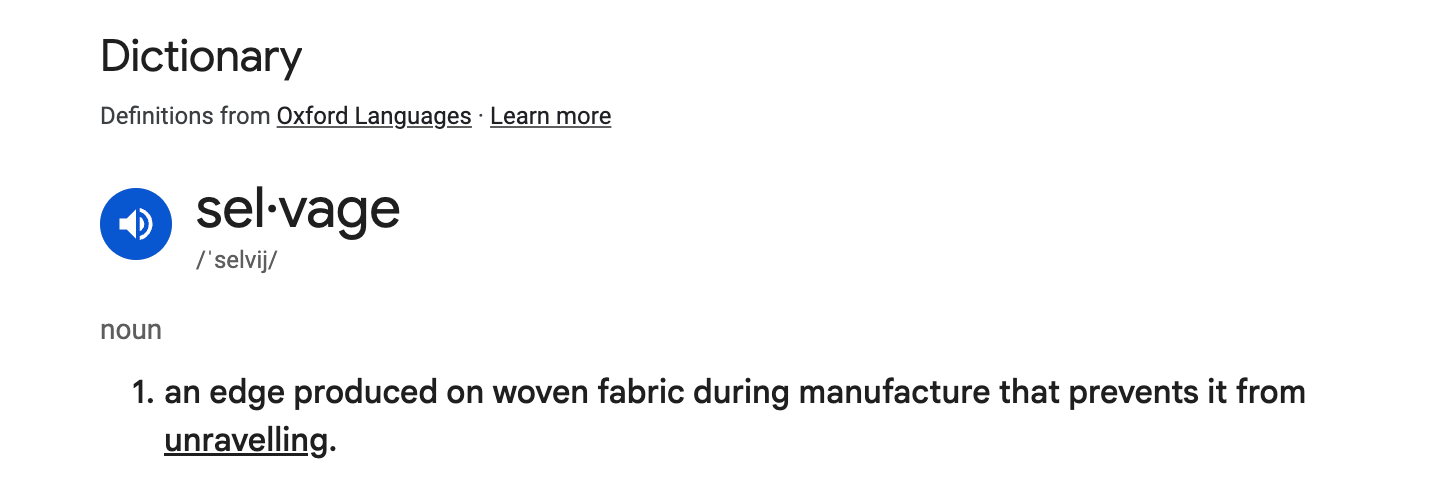
At some point the weaver or the loom turns back inward, creating a border past which one’s fabric will not extend. At some point I return to me. You return to you.
Those of you who I’ve let in more intimately are aware that for fifty years I have been chasing an out-of-body experience that gave me life. At a particular point in time in the 1970s I rose out of my bed without my collected, collaborative flora and fauna and soared beyond it all. As I was zipping along unfettered of physical nature, I eventually decided to define my new selvage, far beyond what I thought my human border could be. I turned back to myself and returned to the weave of my body. I am haunted still by the thought of what might and might not have been had I not done so.3
Now I reiterate my selvage throughout each and every day and night. So do you. Occasionally it reaches further out. Sometimes I turn back a bit earlier. My border seems to fluctuate. Call it ego. I’m not to dissolve just yet, even as I hem and haw.
But here’s the thing: Part of my having a unitive experience was the dawning that we are a unitive experience. I am he as you are he as you are me and we are all together.4
I turn back into myself to maintain a “you are here” X on the Cosmic Galleria map, that I might temporarily remain a functioning human being with bearings. But I have been beyond the selvage. I’m aware that all is shared from the universal to the sub-microscopic level. There’s a far wider fabric intertwining all of existence.
I know you’re me. I know I’m you. I know we’re us.
We are the Great I Am.
…and this footnote. Well fueled, mitochondria. Well fueled.
add The Book of the Taboo Against Knowing Who You Are by Alan Watts to the reading list above.
By my foggy count I have been physically present at the precise moment of five separate human deaths. Peaceful release is the term that comes to mind for four of them, and it is the closest I have come - hovering lovingly adjacent - to reliving my own treasured out-of-body experience. Not a soul turned back.
goo goo g’joob
You’re funny. The rest of my opinion is still in thought.